Second Chances, Forever Portraits: Why Rescue Pet Photography Sessions Are Unlike Any Other
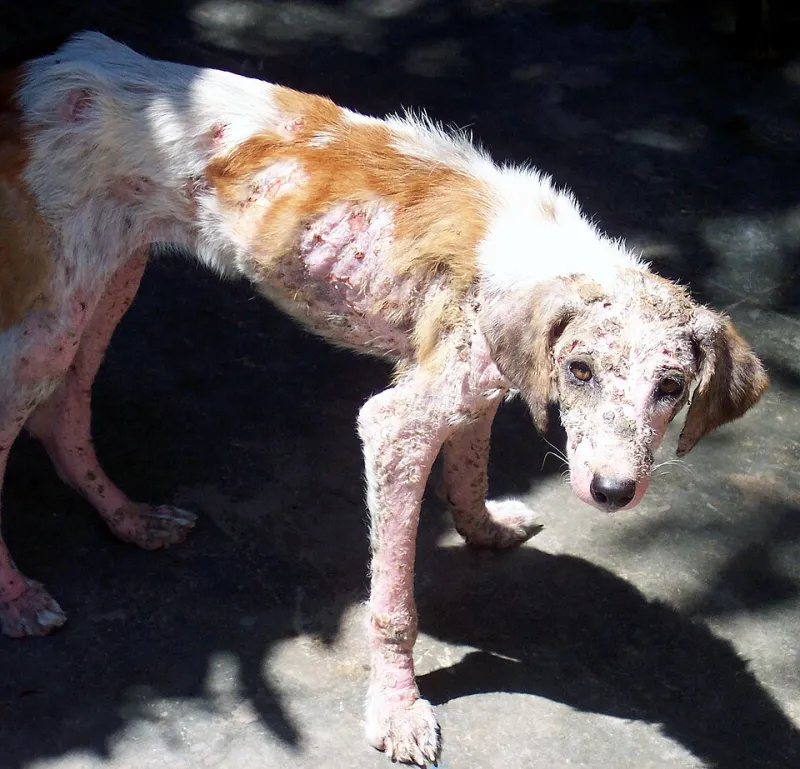
Photo: AmazonCARES, CC BY 2.0, via Wikimedia Commons
I want to tell you about a dog named Biscuit.
Biscuit came from a rural shelter in Tennessee, transferred north through a rescue network, and landed in a foster home in suburban Ohio where he spent six weeks learning that not all hands reach down to hurt. By the time the Kowalski family adopted him, he had mastered the art of sleeping on couches and hadn't quite mastered the art of trusting strangers.
When his family brought him in for a portrait session, nobody was sure how it would go. But about forty minutes in, something shifted. Biscuit stretched out on the studio floor, rested his chin on his paws, and looked up at the camera with an expression that could only be described as peace. That photo now hangs in the Kowalski living room. "It's the first time we saw him fully let go," his mom, Renee, told us. "We didn't even realize it was happening until we saw the image."
That's what rescue pet photography does. It captures a moment of arrival.
The Unique Energy of a Rescue Animal
Anyone who has adopted a rescue pet will tell you the same thing: there's something different about them. It's not just gratitude, though plenty of rescue owners describe that quality in their animals. It's more like a particular kind of presence — a depth that comes from having lived through uncertainty and landed somewhere safe.
That quality is hard to describe in words, but it photographs remarkably well.
Rescue animals often have expressive faces — not because they've been trained to perform, but because they've had to be highly attuned to their environments. They watch people carefully. They respond to shifts in tone and energy. They notice things. In front of a camera, all of that attentiveness becomes something you can see.
"There's a soulfulness to rescue animals that I've come to look for," says one photographer who has worked with dozens of adopted pets over the years. "They're not performing. They're just fully, completely themselves. And that makes for photographs that feel genuinely alive."
Why Families Choose Professional Portraits for Their Rescue Pets
For a lot of adoptive families, a professional photography session is about more than getting a nice photo. It's about marking a milestone.
Take Marcus and Deja Williams from Atlanta, who adopted a bonded pair of cats — Rosie and Fig — from a local rescue organization after both cats had spent over a year in the shelter system. "We wanted something that said, 'You made it. You have a home. You are so loved,'" Deja explained. "A photo on my phone felt too casual for what we were trying to celebrate."
That sentiment comes up again and again with rescue pet families. There's a desire to give the animal something permanent — a portrait that exists as evidence of the life they now have. For families who've lost a rescue pet, those images also become irreplaceable memorial pieces, the visual record of a relationship that started as a leap of faith and became one of the most important bonds of their lives.
The Session Experience for Rescue Animals
It's worth being honest: not every rescue animal walks into a photography studio ready to shine. Some are still working through anxiety. Some have triggers that aren't always predictable. Some need significantly more time to warm up than a dog who's been socialized since puppyhood.
And that's completely okay — in fact, it's something a skilled pet photographer will know how to work with.
Good pet portrait sessions for rescue animals tend to move at the animal's pace. There's no rush, no forcing of poses, no expectation that the pet perform on cue. The goal is to create an environment where the animal feels safe enough to simply be themselves — and then to be ready when that happens.
Families can help by sharing what they know about their pet's history and comfort level ahead of time. Does your rescue dog have a hard time with loud noises? Does your adopted cat need twenty minutes to sniff around a new space before she'll relax? That information is genuinely useful and helps a photographer tailor the session from the start.
Bringing a favorite toy, a familiar blanket, or even a piece of clothing that smells like home can make a significant difference in how quickly a rescue animal settles into the space.
Stories Told in Still Images
Shelley Nguyen adopted her greyhound, Pepper, from a racing rescue in Florida. Pepper had spent the first four years of her life on a track, and when she came home with Shelley, she had never climbed stairs, never seen a television, and had no idea what to do with a dog toy.
Two years later, Shelley brought Pepper in for a portrait session. "I wanted to document who she became," Shelley said. "Not what she was before, but who she is now. Because she is genuinely one of the most joyful creatures I've ever met, and I want that to exist somewhere permanent."
The portraits from that session show a dog draped elegantly across a velvet chair, looking like she was born to be exactly there. Which, in every way that matters, she was.
That's the thing about rescue pet photography: the story behind the subject makes every image richer. You're not just photographing an animal. You're photographing resilience. You're photographing the moment someone decided this life was worth saving, and the life that bloomed from that decision.
A Portrait as a Declaration of Love
At Tribute Pet Photography, we've had the privilege of working with rescue animals of every shape, size, and backstory — shy cats who spent years in shelters, dogs with complicated pasts, senior animals adopted in their final chapter, and everything in between. What they share is this: they are deeply, fiercely loved by the families who chose them.
A professional portrait is one way of saying that out loud. It's a way of saying: you belong here, and what you mean to us deserves to be seen.
Whether your rescue pet has been home for two months or ten years, it's never too early or too late to give them that.
Biscuit is still sleeping on the Kowalski couch, by the way. His portrait is still on the wall. And according to Renee, he has fully, finally, stopped waiting for things to go wrong.