They Never Worry About Their Good Side: Lessons Our Pets Teach Us About the Camera
Here's a funny thing that happens at pet photography sessions all across the country: the pet does great, and the owner falls apart.
Not emotionally — well, sometimes emotionally. But physically. The owner hovers at the edge of the frame, tugging at their shirt, dodging the camera, insisting, "Oh no, don't get me, I'm terrible in photos." Meanwhile, their golden retriever is sprawled across a sunlit blanket, tongue out, zero shame, absolutely radiating main character energy.
Somewhere along the way, most of us decided we're not photogenic. Our pets never got that memo. And if you pay attention, they've got a lot to teach us about it.
The Unbothered Subject
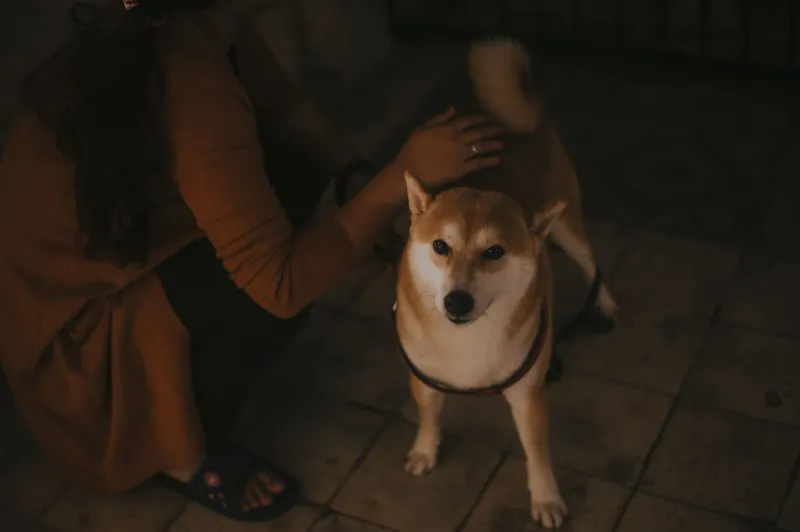
Watch a dog being photographed. It doesn't angle itself toward the light or suck in anything. It doesn't ask to see the shot or announce that it blinks in every photo. It just... exists, fully and without apology, and the best picture happens because of that.
Cats take it even further. A cat has never once performed for a camera. The camera performs for the cat. And yet some of the most striking portraits we've ever seen come from exactly that dynamic — a subject so uninterested in being seen that the image catches something true.
There's a lesson buried in there for the humans hovering off-frame. Most of our discomfort with photos isn't about how we look. It's about how self-conscious we feel. The pet has no self-consciousness, so it has no bad photo day.
When the Session Heals the Human
Ask around among pet photographers and you'll hear a recurring story: owners who booked a session for their animal and walked away changed themselves.
A woman in Ohio told us she booked a memorial session for her aging beagle and ended up in half the frames because the beagle wouldn't settle without her. She hadn't liked a photo of herself in fifteen years. She now has one hanging in her hallway — her, laughing on the kitchen floor, dog draped across her lap — and calls it the only picture of herself she's ever loved.
A widower in Arizona said his late wife always handled the camera. When his terrier mix got gray around the muzzle, he finally booked a session, terrified of being photographed alone. The photographer gave him a job — hold the squeaky toy, look at her, not at me — and by the end he'd forgotten the camera existed. The resulting portrait, he said, felt like his wife took it.
Grief has a way of shrinking our world down to what matters. And what matters is rarely whether our hair looks right.
Steal Their Tricks
You don't need a professional session to borrow what pets already know. A few things they'd tell you, if they could:
- Do something, don't pose. Every great pet photo comes from an action — a fetch, a stretch, a head tilt. Humans photograph better mid-moment too. Toss the ball. Walk the trail. Let the picture catch you living.
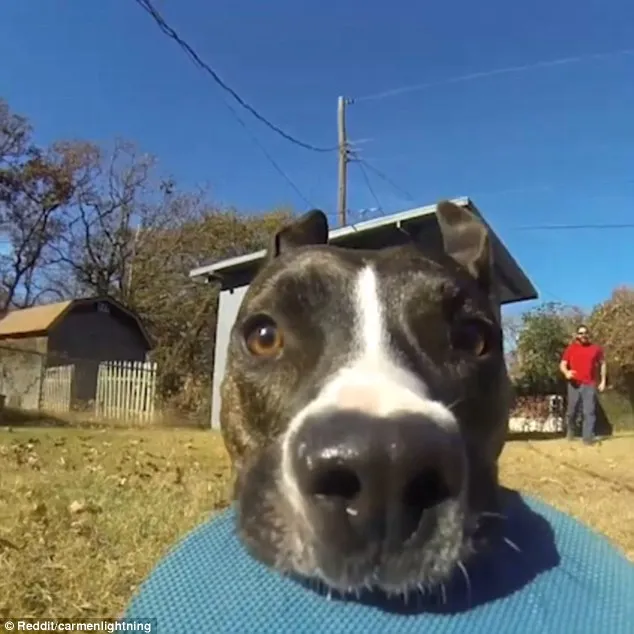
- Forget the lens entirely. Pets don't know (or care) where the camera is. Owners who look their pet in the eye during a session get warmer, more honest images — and they stop performing.
- Let someone else direct. Pets trust their handler. Humans could stand to do the same. A good photographer's whole job is making you forget to be nervous.
- Repeat exposure works. The more photos you take of your pet, the more relaxed they get. The same is true for you. Camera shyness isn't permanent; it's just under-practiced.
The Portrait Goes Both Ways
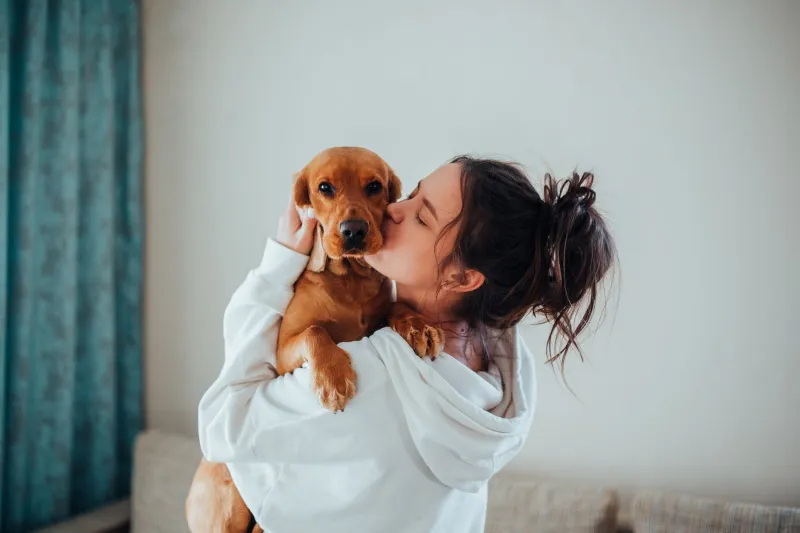
There's a reason the most treasured pet photos so often include the human. It's not just that owners love their animals. It's that, next to their animals, people stop editing themselves. The dog doesn't care about your laugh lines. The cat has never once judged your posture.
So the next time you schedule a session — or just grab your phone on a Saturday morning — resist the urge to stay behind the camera. Get in the frame. Your pet already thinks you're photogenic. Honestly, they've thought so all along.
And if you're nervous? Take a cue from the professional on the other end of the leash: show up, be exactly who you are, and let the moment do the rest. It works for them. It'll work for you.